Invisalign Teeth Straightening Therapy Aftercare
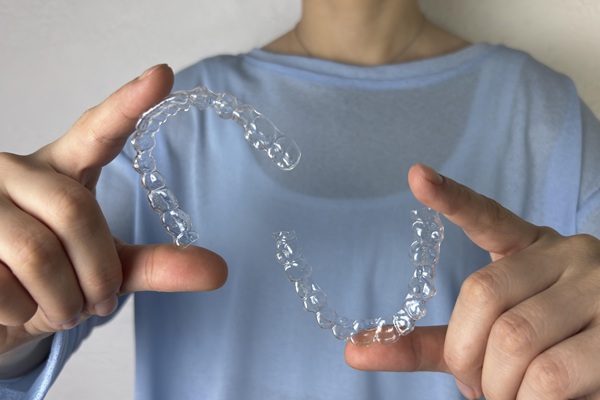
Invisalign® is a great treatment method to undergo when needing to straighten crooked teeth or correct bite issues. However, life after Invisalign® is what excites most people! What is important to know is that afterward, it is crucial to abide by a few things in order to maintain the results that come from the treatment. Continue reading to find out more about retainers and aftercare tips from a general dentist.
Life after Invisalign®
Below is a quick overview of what to expect after Invisalign® treatment is complete. This information may be helpful to individuals who are preparing to finish their treatment process.
Retainers
As soon as Invisalign® treatment is complete, most general dentists will recommend the use of a retainer. Retainers help to keep the teeth in the proper position, thus maintaining the results that came from the treatment process. Just like with the aligners, retainers too are custom-created to fit the patient's upper and/or lower arch.
Retainers are typically offered in two different ways. The most common type of retainer to follow Invisalign® treatment is one that is removable and only worn at night while the patient is asleep. This type of retainer has a small metal bar that goes directly over the teeth. A small piece usually sits in the middle for stability. Although this type of retainer is most common, it is not always the most efficient. Because it is removable, patients often forget to wear it or become less disciplined with it. Long term, this can have an effect on the teeth. The teeth can eventually shift back into the position they were in prior to Invisalign® treatment.
The other type of retainer that may be recommended after Invisalign® treatment is one that is cemented into place permanently. The general dentist will still have the piece custom-made; however, it will literally be attached to the backside of the teeth. It is not removable unless by a dentist and allows for the maintenance of permanent results.
Oral hygiene
After any type of dental work, good oral hygiene is necessary. However, with Invisalign®, it is especially important because the teeth have shifted into their proper position. This means that old spaces or gaps may be closed, and the teeth may require different attention. It is crucial that proper flossing and brushing is done each day as this will help ensure that the teeth remain in great shape, making the most of the results from Invisalign®.
General dentists recommend brushing twice a day or after every meal with a soft to medium bristled toothbrush. Additionally, flossing and rinsing at least once a day will help keep the gums in healthy shape.
Find out more about Invisalign®
When considering Invisalign®, it is a good idea to also have an understanding of the aftercare, as stated above. For further inquiries about the treatment process and life afterward, it is best to consult directly with a general dentist. To learn more or to get scheduled for an appointment, reach out today.
Request an appointment here: https://lawrencevilledentalassociates.com or call Lawrenceville Dental Associates at (770) 796-4236 for an appointment in our Lawrenceville office.
Check out what others are saying about our dental services on Google: Invisalign in Lawrenceville, GA.
Related Posts
A bright, confident smile can light up a room and leave a lasting impression. Unfortunately, stained or discolored teeth can harm one's self-esteem. Professional teeth whitening treatments are a popular and effective solution to enhance your smile and restore confidence. Read on to learn more about the everyday benefits of professional teeth whitening.A person's physical…
Every patient’s smile is different, so it makes sense for dentists to treat patients as individuals with specific needs. Personalized treatment at a routine dental care appointment should be an expected part of visiting a dental professional. Patients can expect dentists to tailor treatment in the areas of general maintenance, cancer screenings, and management of…
Considering at-home teeth whitening? Many individuals experience a desire to whiten their teeth to rid them of stains. Whether it be at home or via a dental office, teeth whitening can make a significant difference when it comes to brightening one's smile.However, not everyone is in a position to undergo professional teeth whitening at a…
Dental crowns are among the most common ways to cover teeth that are decaying, severely stained, cracked, or just in bad shape. A crown is a versatile dental treatment that offers restoration and renewal. There are many options when it comes to dental crowns. For example, you can receive a gold, metal alloy, porcelain, or…